
Increase in app adoption
Increase in daily nutrition tracking
Increase in active AI assistant usage
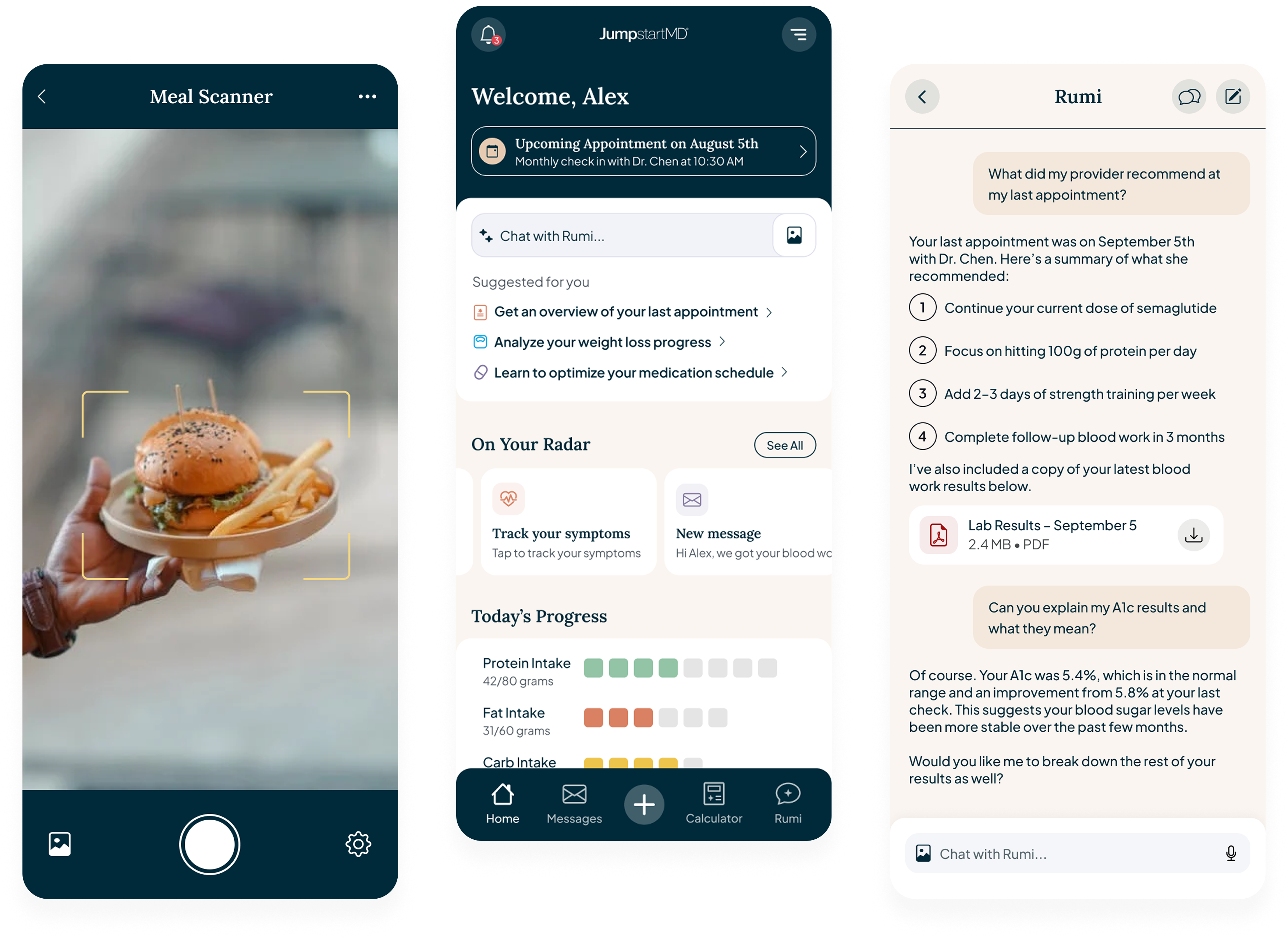
JumpstartMD is a clinician-led health optimization company specializing in metabolic health, weight management, and hormone care. Its mobile app extends care beyond the clinic, combining AI-powered guidance, intelligent nutrition tracking, and personalized health tools to help patients stay engaged with their treatment between visits.
Usability and engagement challenges kept the app from becoming a meaningful part of the patient experience. Working closely with Jumpstart’s product team, I led a redesign focused on removing friction, increasing adoption and engagement, and transforming the app into a core part of the care experience.
Jumpstart delivered a highly personalized, technology-driven approach to care, but its mobile experience wasn't yet matching that ambition. The opportunity was to transform the app from a supporting tool into an intelligent extension of care that could connect the patient journey, make everyday health tracking dramatically easier, and deliver personalized guidance through AI. Product data and user feedback revealed three key challenges standing in the way:
The opportunity was bigger than improving individual features. We needed to make the app more useful throughout the entire patient journey by connecting patients to their care, reducing the effort required to stay on track, and providing personalized support when they needed it.

The redesign centered on solving three core challenges: making Rumi more visible and personalized, transforming clunky health tracking into a seamless AI-powered experience, and elevating the interface to match Jumpstart’s premium brand. Working closely with the team, we prioritized features that directly addressed user pain points while enhancing trust, usability, and long-term engagement.
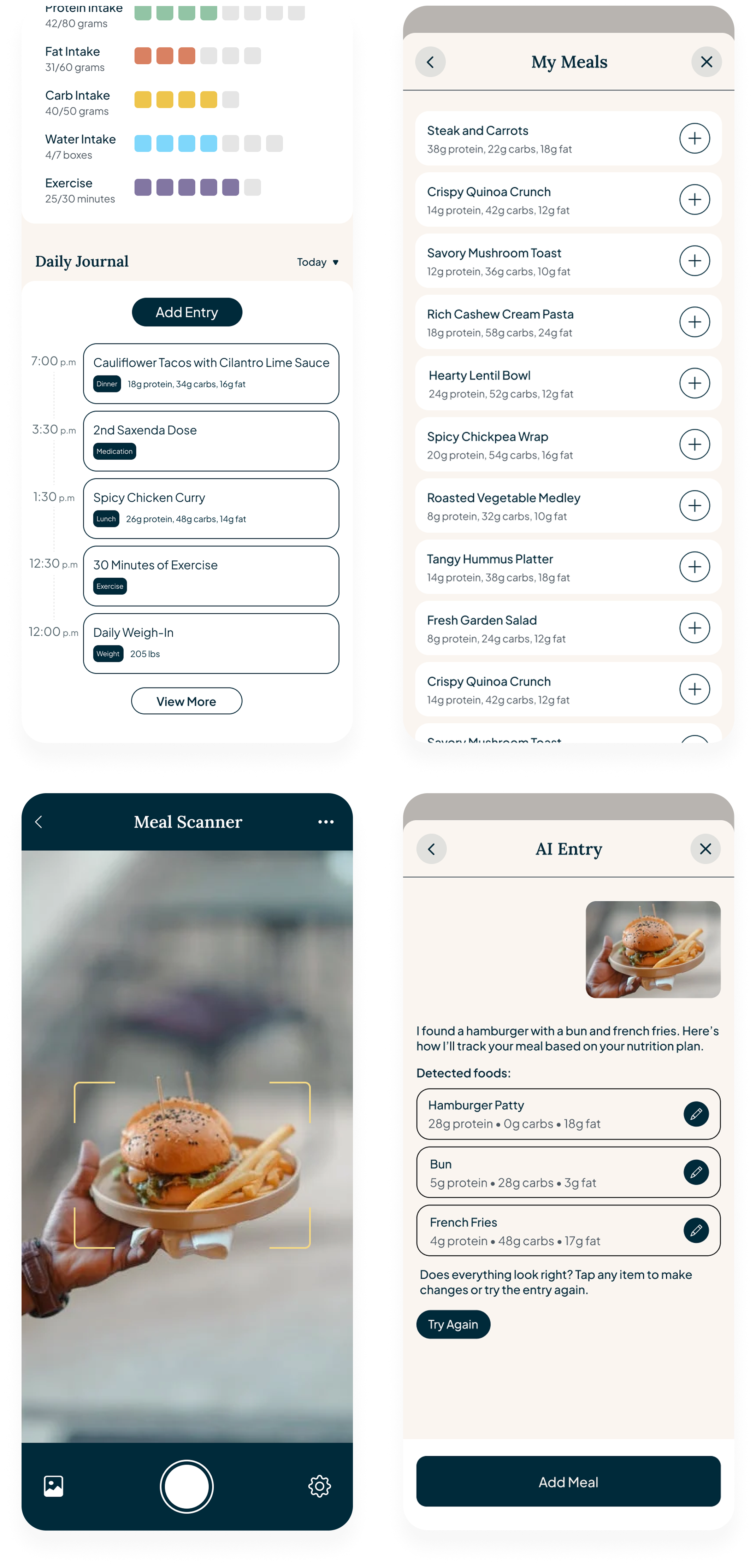
Nutrition tracking was critical to the treatment experience, but traditional logging required too much effort to sustain consistently. Instead of simply improving the existing workflow, we explored new ways to dramatically reduce the work required from patients.
I designed a new tracking experience that combined several approaches:
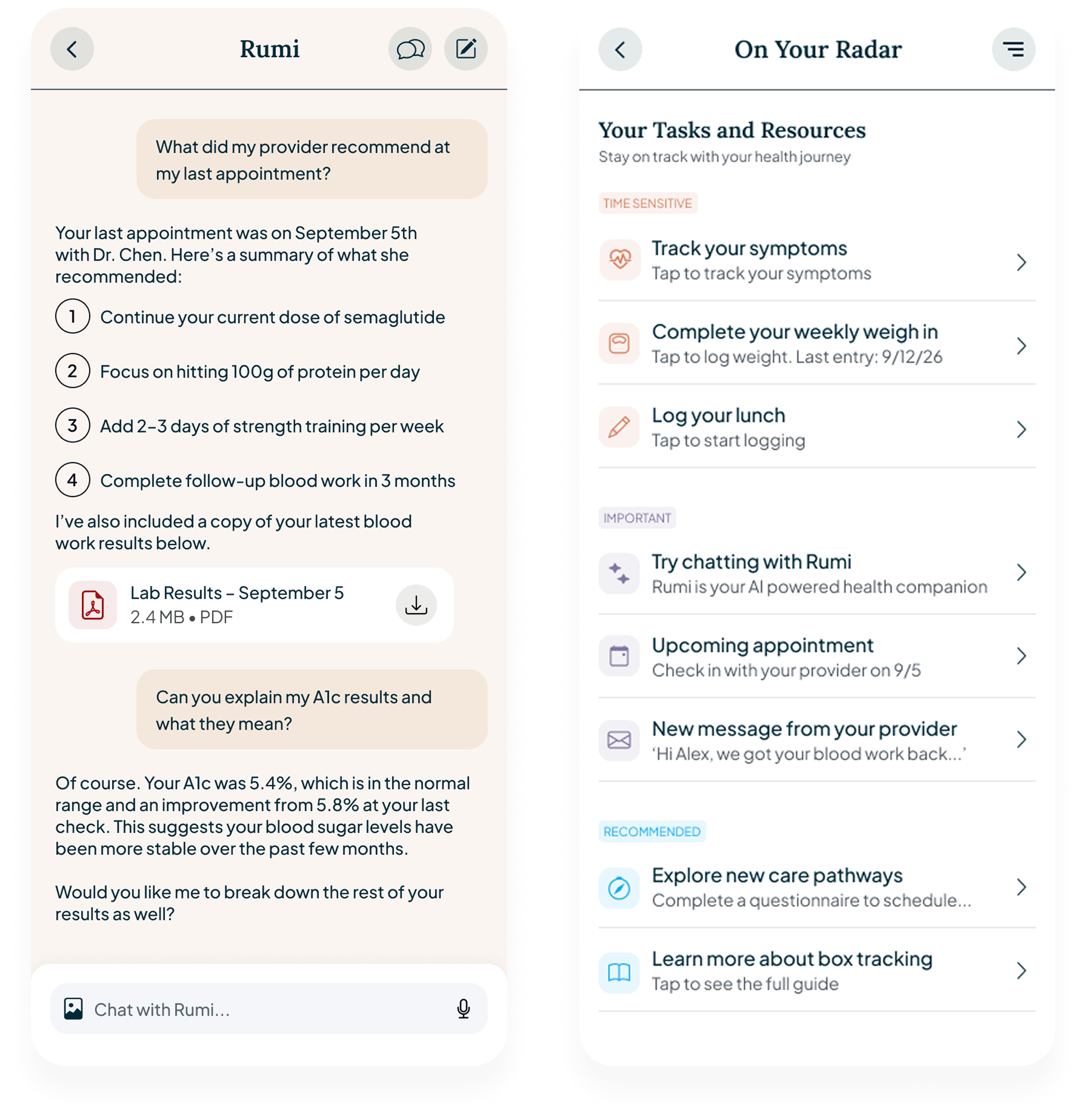
A key opportunity was making the app more useful beyond individual features and creating greater continuity between clinical visits. I focused on helping patients understand what needed their attention, stay connected to their care, and access relevant information without having to search across the app.
To do this, I focused on two key areas:
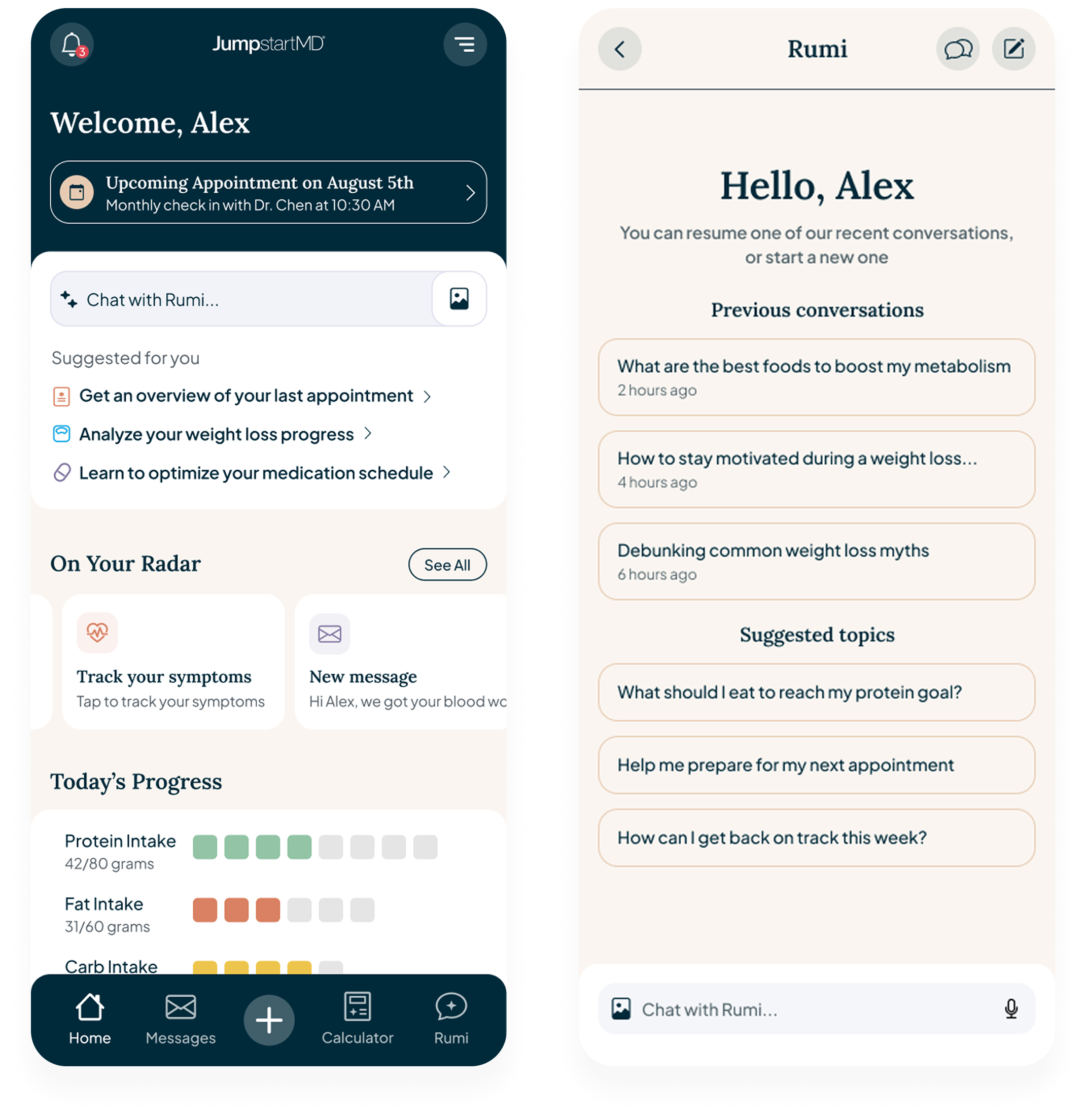
I improved Rumi’s adoption and usefulness by introducing a prominent dashboard widget that encourages clients to start a chat. The widget leverages our AI capabilities to surface personalized, context-aware suggestions, anticipating likely challenges based on patterns from similar clients and guiding users toward meaningful conversations. Inside the Rumi screen, I added a history of past interactions, allowing clients to continue evolving conversations as new obstacles arise, reinforcing continuity and sustained engagement.
The redesign drove measurable improvements across the app’s most important behaviors:
Together, these improvements expanded the role of the app beyond individual visits, creating a more connected digital experience that helped patients track their progress, access personalized guidance, and stay engaged with their care between appointments.
